Nurturing science-based evidence for sound policy-making is a guiding principle for A.I.S.E.. We undertake scientific research with partners (academia, research institutes, etc.) to assess the impact of formulations on human health and the environment. Once complete, our research results are made widely available through articles in academic and scientific journals.
A.I.S.E. partners with the surfactants industry association, CESIO, to carry out risk assessments on the impact of surfactants on the environment and human health. This is done through the joint research platform ERASM, and a wealth of scientific research and publications is also available on the ERASM website.
Many other collaborations and joint platforms exist for scientific research, such as HERA, an industry initiative to look at human and environmental risk assessments that predates REACH legislation by five years or EPAA, the private / public partnership on alternatives to animal testing.
Alternatives to animal testing
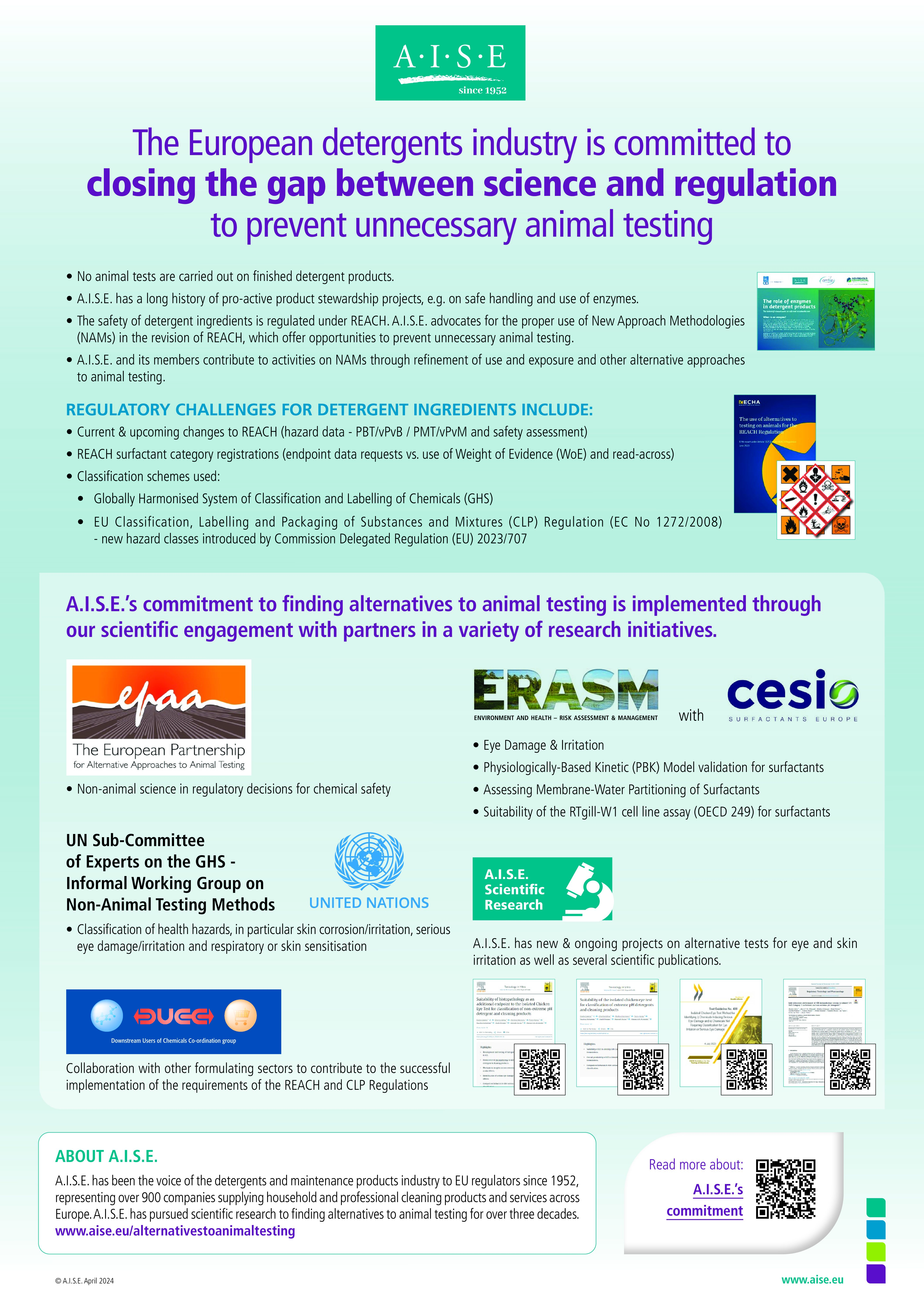
- A.I.S.E.’s work in alternatives to animal testing – see poster downloadable below
- Suitability of histopathology as an additional endpoint to the Isolated Chicken Eye Test for Classification of non-extreme pH Detergent and Cleaning Products – see Toxicology In Vitro 28, 657-666. Cazelle et al, 2014
- Suitability of the Isolated Chicken Eye Test for Classification of Extreme pH Detergents and Cleaning Products – see Toxicology In Vitro 29, 609-616. Cazelle et al, 2015.
- Suitability of the Isolated Chicken Eye Test for Classification of Extreme pH Detergents and Cleaning Products – see Revised version of OECD Test Guideline No. 438, 2018
- Inter-laboratory performance of ICE histopathology scoring to identify UN GHS Category 1 surfactants and non-extreme pH detergents – see Regulatory Toxicology and Pharmacology , Volume 1326, November 2021, 105044. Eskes et al, 2021.
Better Labels
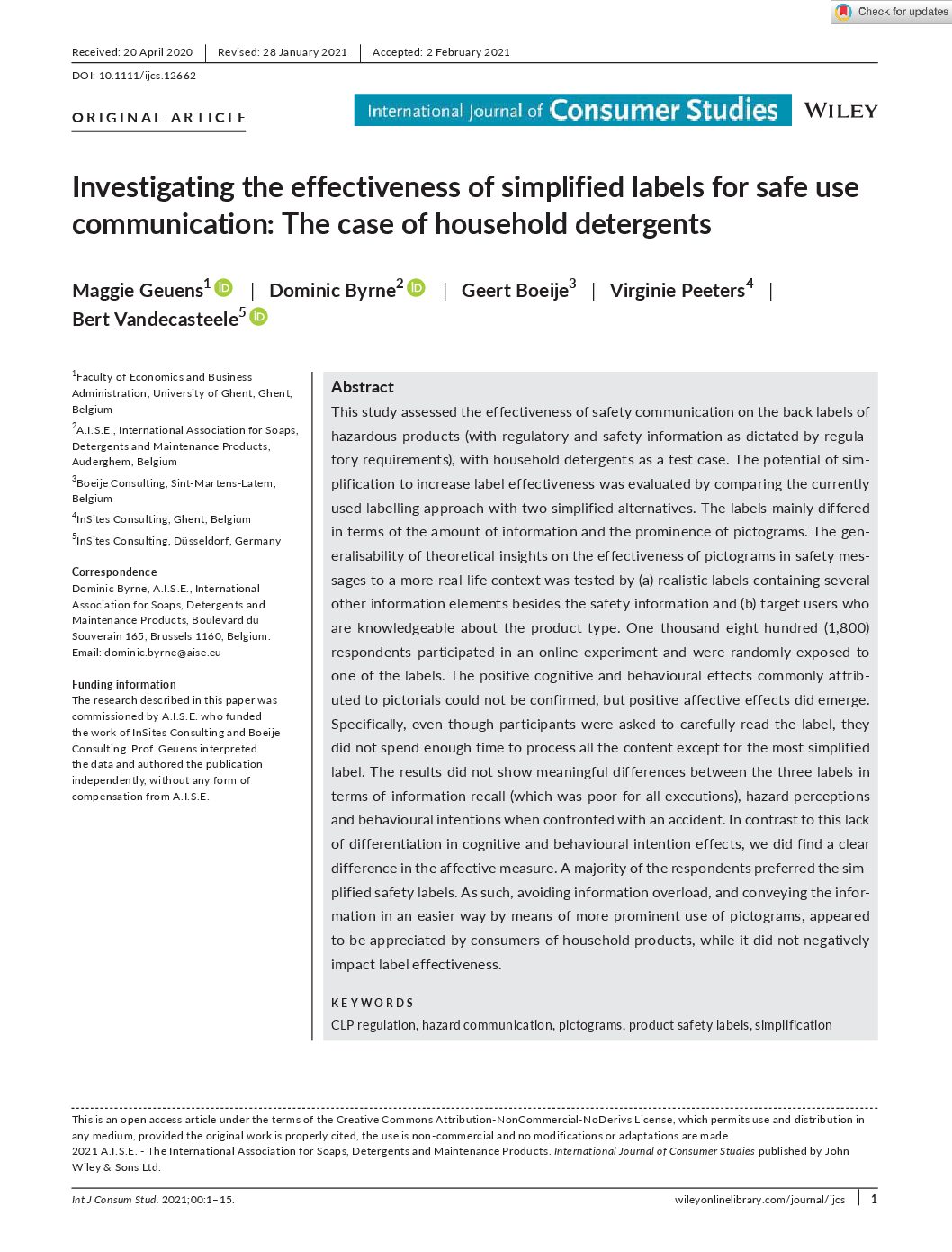
- Investigating the effectiveness of simplified labels for safe use communication: The case of household detergents. Maggie Geuens et al, February 2021 – see International Journal of Consumer Studies
Enzymes
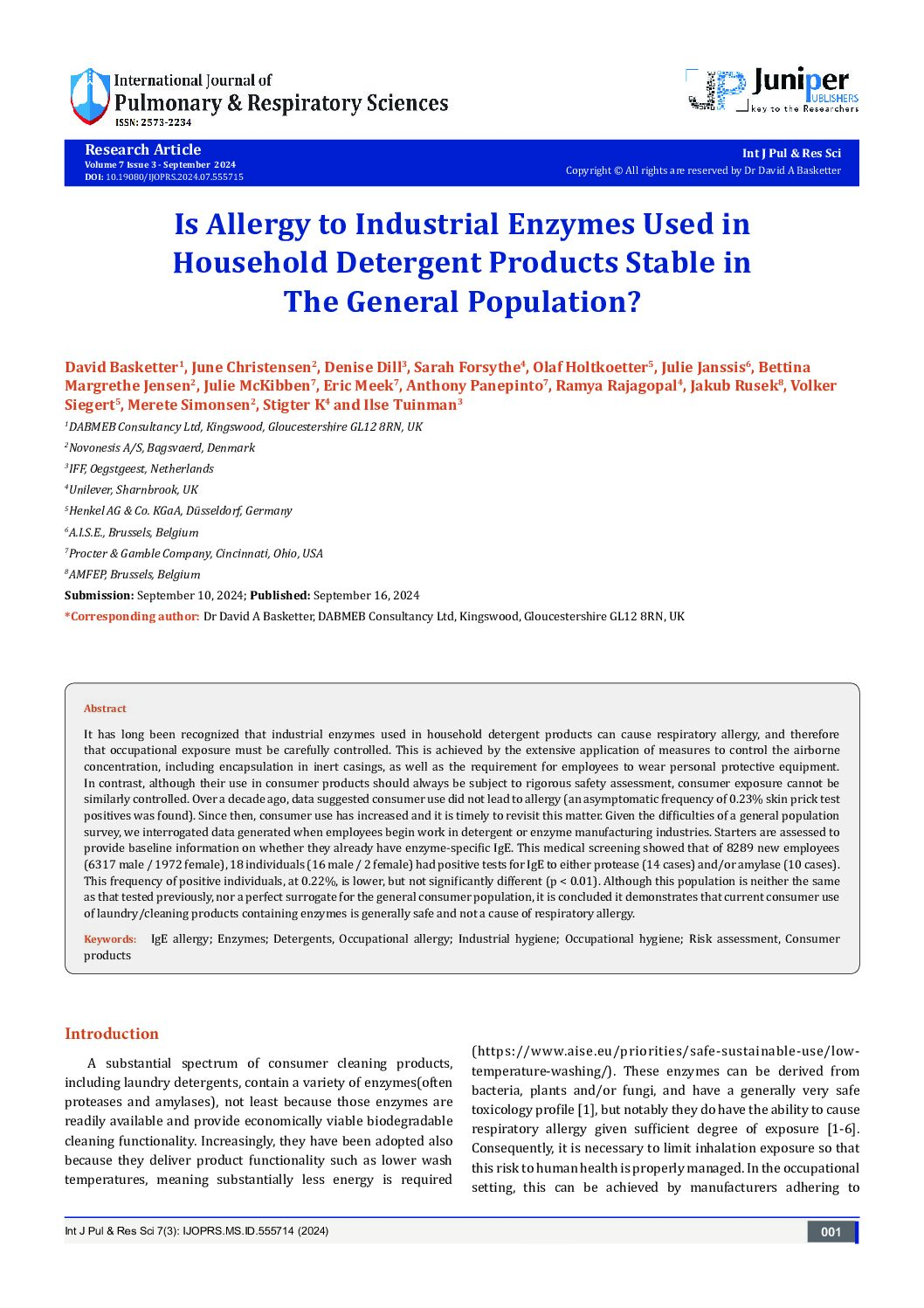
- Is Allergy to Industrial Enzymes Used in Household Detergent Products Stable in the General Population? D.Basketter et al, 2024, see International Journal of Pulmonary and Respiratory Sciences.
- Enzymes and Sensitization via Skin Exposure: A critical analysis – D.Basketter, I.Kimber, 2022 – see Regulatory Toxicology and Pharmacology, Vol 12, 2022, 105112.
- Managing the Risk of Occupational Allergy in the Enzyme Detergent Industry – D.Basketter et al – see Journal of Occupational and Environmental Hygiene, Vol.12, 2015, Issue 7.
- Defining occupational and consumer exposure limits for enzyme protein respiratory allergens under REACH – D.Basketter et al, 2010 – see article in Toxicology Vol.268, Issue 3.
- Assessing the risk of type 1 allergy to enzymes present in laundry and cleaning products: Evidence from the clinical data – K.Sarlo et al, 2010 – see article in Toxicology, Vol. 271, Issue 3.
- Human & Environmental Risk Assessment on ingredients of household cleaning products (HERA) – Subtilisins (Protease) – 2007 – Downloadable below
Hazard classification
- The EU Detergent Industry Network “DetNet” – an industry approach for the EU CLP classification of detergent and cleaning products for skin and eye effects – T. Petry et al, 2024 –see Tenside Surfactants Detergents Journal
- Eye hazard classification according to UN GHS/EU CLP and the severity of eye symptoms caused by accidental exposures to detergents and cleaning products – R. Scazzola et al, 2019 see Regulatory Toxicology and Pharmacology Journal
Hypochlorite
- Benefits and safety aspects of hypochlorite formulated in domestic products – A.I.S.E. – 1997
Downloadable below
Insecticides & repellents
- Two New Alternatives to the Conventional Arm-in-Cage Test for Assessing Topical Repellents – M.Moreno-Gomez et al, 2021 see Journal of Medical Entomology .
Microorganisms
- Risk analysis approaches for microbial ingredients in microbial-based cleaning products – D.Boesenberg et al, 2025, see Risk Analysis
Microplastics
- Cross industry agreement for the prevention of microplastic release into the aquatic environment during the washing of synthetic textiles – 2018 – Downloadable below
Polymer biodegradation
- Prolonged test duration for testing the biodegradability of polymers in OECD 301 improves reproducibility of test results – M. Bergheim et al, 2024 – see poster downloadable below
- Biodegradability of Water-Soluble and Water-Dispersible Polymers in Respirometric Laboratory Methods – C. Battagliarin et al, 2024 – see poster downloadable below
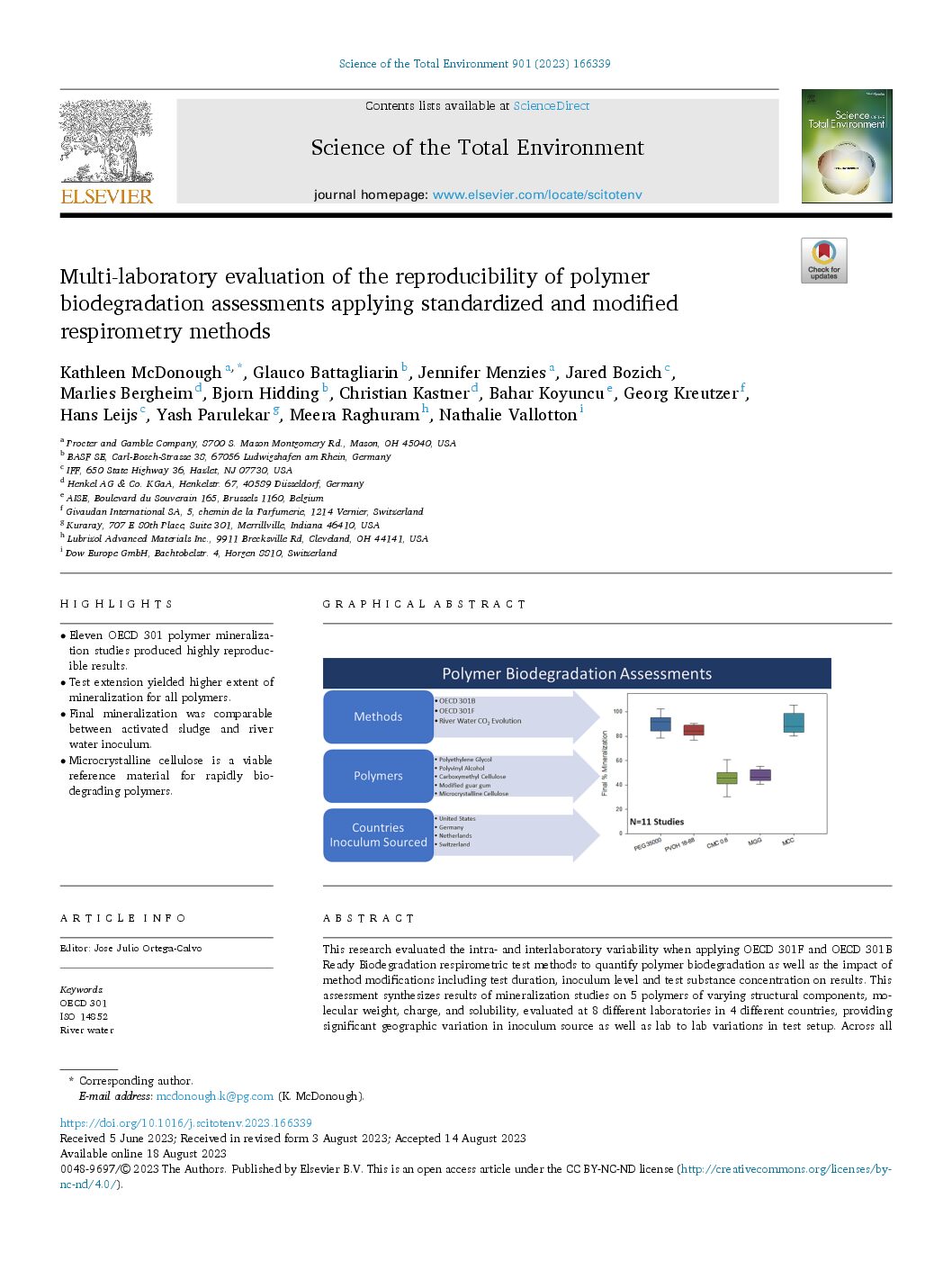
- Multi-laboratory evaluation of the reproducibility of polymer biodegradation assessments applying standardized and modified respirometry methods – K. McDonough et al, 2023
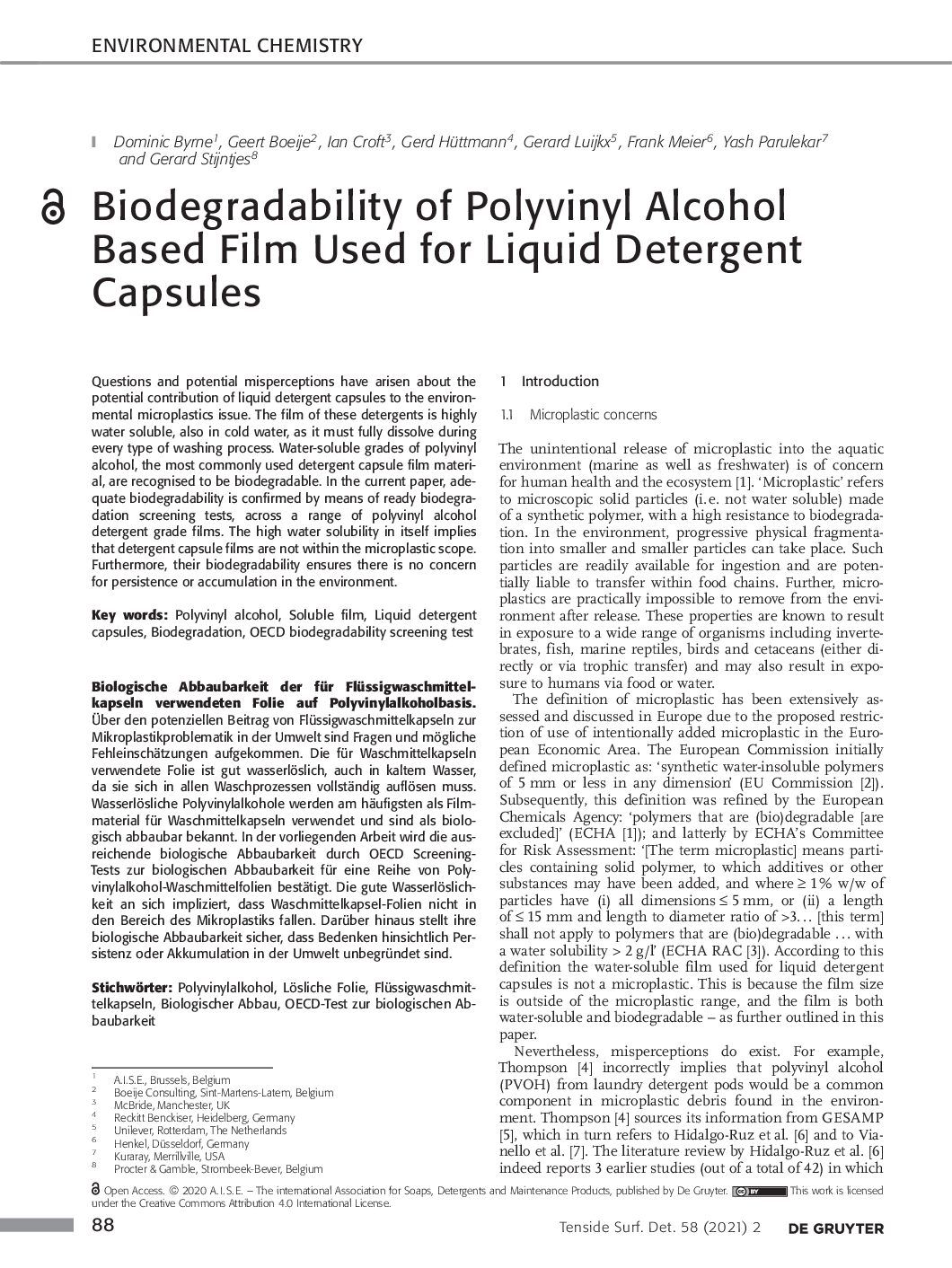
see Science of The Total Environment article - Biodegradability of Polyvinyl Alcohol Based Film Used for Liquid Detergent Capsules – D.Byrne et al, 2021
see Tenside Surfactants Detergents Journal